In an era where every device, app, and task depends on connectivity, slow internet is more than an inconvenience — it’s a daily disruption. From online learning to remote work, entertainment streaming, and smart home automation, the demand for faster, more stable internet has never been greater.
At Best ISP Deals, we often encounter clients frustrated by sluggish connections, lagging video calls, and buffering streams. This case study showcases how one Texas family’s frustrating internet experience was completely transformed by upgrading to AT&T Fiber Internet, turning slow, unreliable connectivity into seamless, high-speed performance.
The Problem: A Household Struggling to Stay Connected
Our client, a family of five living in Dallas, Texas, had relied on a traditional DSL-based AT&T Internet plan for nearly a decade. While it was sufficient when their usage was limited to browsing and email, the family’s digital lifestyle evolved dramatically.
By 2025, the household included:
-
Two adults working remotely full-time,
-
Two school-age children attending virtual classes, and
-
A home filled with streaming devices, gaming consoles, and smart appliances.
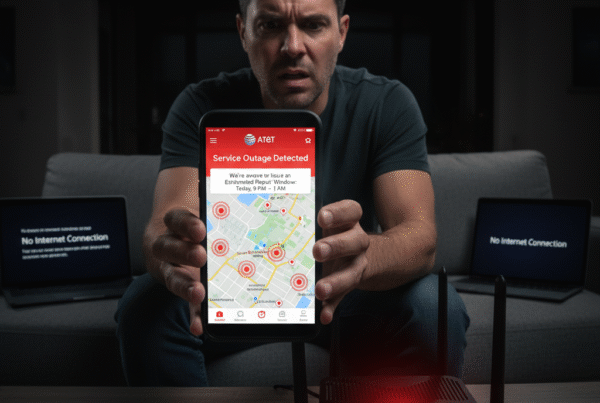
Despite paying for “up to 25 Mbps,” the family often experienced download speeds below 10 Mbps during busy hours. Video calls dropped unexpectedly, streaming services paused to buffer, and smart home devices frequently disconnected.
Resetting routers, changing Wi-Fi channels, and even replacing modems didn’t help. Frustration grew — productivity dropped, and family movie nights became impossible.
When they reached out to Best ISP Deals, they were looking for a real, long-term fix, not another temporary patch.
The Assessment: Pinpointing the Bottleneck
Our first step was a complete network audit. Using diagnostic tools, we measured signal strength, latency, and real-time speed consistency across different devices and rooms.
Here’s what we discovered:
-
Bandwidth congestion: DSL lines share limited capacity, which worsens when multiple users stream or work online simultaneously.
-
Signal degradation: The distance from the local DSL exchange reduced actual speed output.
-
Outdated technology: DSL infrastructure simply couldn’t keep up with modern high-data applications like video conferencing and 4K streaming.
Even though the modem and router were functioning correctly, the underlying DSL connection was the root cause. The solution was clear — the family needed a fiber-optic upgrade for a truly stable and high-speed experience.
The Solution: Upgrading to AT&T Fiber Internet
After reviewing their usage and requirements, we recommended the AT&T Fiber 500 plan — offering up to 500 Mbps download and upload speeds with unlimited data and superior reliability.
Fiber technology transmits data using light signals through glass strands, allowing it to deliver data faster, with minimal loss and interference. Unlike DSL or cable, fiber connections are not affected by distance or neighborhood congestion.
Through Best ISP Deals, the family’s transition was handled seamlessly:
-
Pre-installation check: We verified local fiber availability and scheduled installation.
-
Professional installation: An AT&T-certified technician replaced the copper DSL line with fiber-optic cabling.
-
New hardware setup: The old router was replaced with the latest AT&T Wi-Fi 6 Gateway, designed for gigabit speeds and multiple device management.
-
Testing and optimization: We tested connectivity across every room, ensuring no dead zones and full signal coverage.
The installation process took less than three hours — and the transformation was immediate.
The Transformation: Before and After Results
Once the AT&T Fiber connection was active, the difference was night and day. The family’s average speeds jumped from 10–20 Mbps to a consistent 480–510 Mbps on both download and upload.
Here’s how life changed after the upgrade:
-
Flawless streaming: Netflix, Disney+, and YouTube ran in 4K Ultra HD with zero buffering.
-
Lag-free work: Zoom, Microsoft Teams, and Google Meet calls remained stable even when two meetings ran at once.
-
Gaming performance: Ping times dropped from 80ms to under 10ms, improving online gaming responsiveness dramatically.
-
Smart home stability: Cameras, smart speakers, and appliances stayed connected 24/7.
-
Wi-Fi coverage: Every room had full-bar connectivity — even the backyard patio received strong signal strength.
The family could now use more than 20 devices simultaneously without any slowdown, proving the strength of AT&T’s fiber infrastructure.
Customer Experience: From Frustration to Satisfaction
When we followed up a week later, the family couldn’t have been happier.
“It’s unbelievable how much faster and more stable everything is now. We used to argue over who could stream or work online without lag — now everyone can do everything at once. The upgrade through Best ISP Deals and AT&T Fiber has completely changed our home.”
Their story reflects a common truth: technology upgrades don’t just improve performance — they enhance lifestyle, reduce stress, and improve productivity.
Why AT&T Fiber Outperforms Other Technologies
The success of this upgrade lies in the fundamental differences between DSL, cable, and fiber connections.
-
DSL (Digital Subscriber Line): Relies on outdated copper wiring and loses signal strength over distance.
-
Cable Internet: Faster than DSL but shared among neighbors, so speeds drop during high-usage periods.
-
Fiber Internet: Uses light-based data transmission, offering symmetrical speeds (upload = download), no signal loss, and consistent performance 24/7.
AT&T Fiber also supports future upgrades, allowing customers to move from 500 Mbps to 1 Gbps or even multi-gig speeds without changing the core infrastructure.
Technical Breakdown: Inside the AT&T Fiber Advantage
Fiber-optic technology uses ultra-thin glass fibers to carry pulses of light that represent data. These light pulses can travel miles without weakening, unlike the electrical signals used in copper cables.
AT&T’s Fiber network is built with:
-
Dedicated lines per household — no shared bandwidth like cable.
-
Wi-Fi 6 routers — faster, more energy-efficient, and capable of handling multiple connections at once.
-
Advanced encryption for improved online security.
-
Low latency design, making it ideal for real-time activities like online gaming, stock trading, and teleconferencing.
This technical foundation ensures not just speed but stability, privacy, and future scalability.
Long-Term Benefits and Cost Savings
Six months later, the family continued to enjoy the same reliability. They reported:
-
Zero service interruptions,
-
Lower monthly energy usage due to efficient hardware, and
-
Cost savings after bundling AT&T Internet + AT&T TV, allowing them to eliminate third-party streaming subscriptions.
The consistent performance also increased their work-from-home efficiency, leading to better productivity and fewer dropped calls — a direct value that far outweighs the cost of the upgrade.
Conclusion: The Power of a Future-Ready Connection
This case study shows how upgrading from traditional DSL to AT&T Fiber Internet through Best ISP Deals can dramatically enhance both performance and lifestyle. From eliminating buffering to enabling reliable remote work and entertainment, fiber internet isn’t just faster — it’s smarter, more stable, and built for the future.
If you’re tired of constant buffering, lag, or connection drops, consider the same step this family took. AT&T Fiber, delivered and supported by Best ISP Deals, offers the speed, security, and consistency modern households need to thrive in today’s connected world.