In today’s connected world, choosing between AT&T and Spectrum for high-speed internet can be challenging — especially when both promise fast speeds and reliable performance. Many customers across USA are now comparing these two giants to determine which truly delivers better value for the price.
A recent discussion online highlighted this exact question: “Is AT&T cable internet faster than Spectrum at a similar price tier?” The responses revealed some key insights that can help you make an informed choice.
At BestISPDeals, we’ve summarized the facts, technical details, and customer experiences to help you understand which provider may be the better fit for your home or business internet needs.
1. Understanding the Difference: Fiber vs. Cable
One of the biggest misconceptions among customers is that AT&T offers “cable internet.” In reality, AT&T primarily provides fiber or DSL connections — not traditional coaxial cable internet.
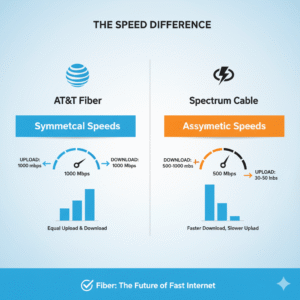
Spectrum, on the other hand, uses hybrid fiber-coaxial (HFC) connections. While these can deliver solid download speeds, they often fall short in upload performance compared to pure fiber lines.
Here’s the difference in simple terms:
| Connection Type | Provider | Download Speed | Upload Speed | Technology |
|---|---|---|---|---|
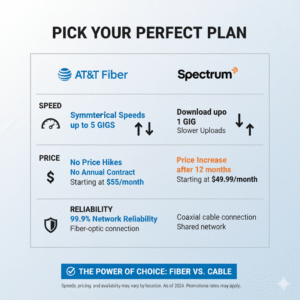
| Fiber | AT&T | Up to 5 Gbps | Up to 5 Gbps (Symmetrical) | Fiber Optic |
| Cable | Spectrum | Up to 1 Gbps | ~35 Mbps | Coaxial Cable |
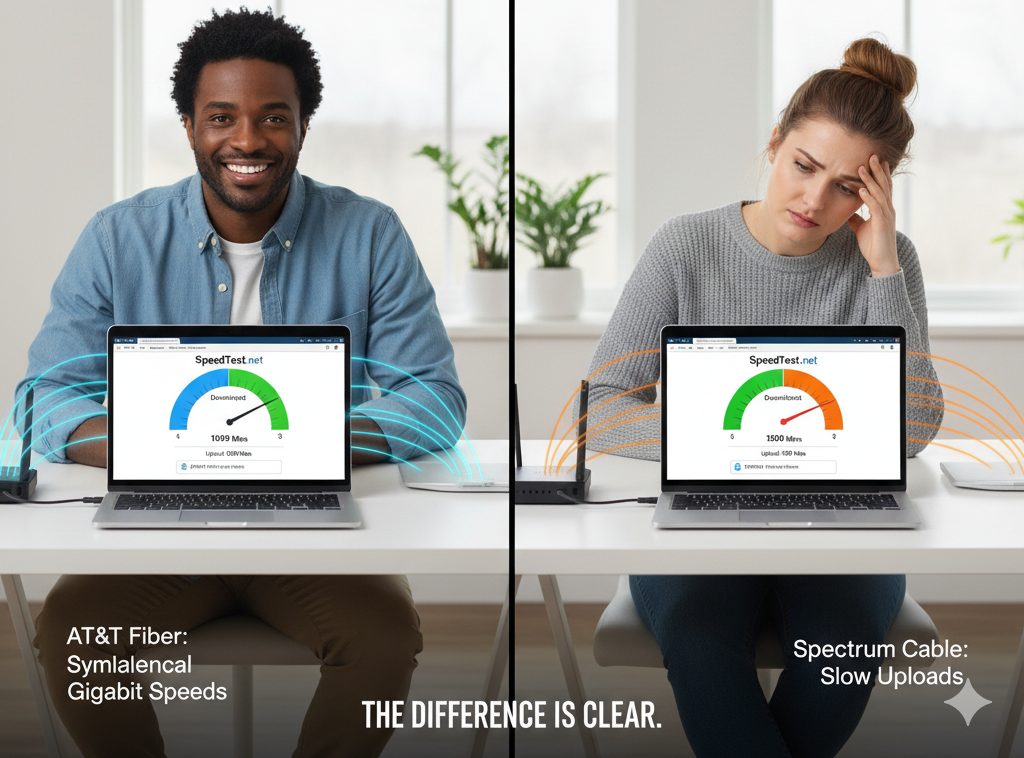
So, when comparing at the same price tier, AT&T Fiber typically delivers faster and more consistent speeds, especially for users who stream, work remotely, or upload large files frequently.
2. Speed and Reliability in USA
Real-world performance depends heavily on your location, infrastructure quality, and network maintenance.
In some parts of USA, Spectrum’s network may perform well — offering up to 400 Mbps at the base level. However, users in fiber-ready zones report that AT&T Fiber often provides faster, more stable speeds for the same or slightly lower monthly cost once Spectrum’s promotional pricing expires.
Customers in online discussions noted:
- “AT&T Fiber is the answer, hands down.”
- “Spectrum speeds increased, but Fiber still outperforms during peak hours.”
- “I’d rather have slower DSL that never drops than cable that throttles during busy times.”
Fiber’s immunity to signal interference and reduced latency make it ideal for streaming, gaming, and business use.
3. Price Comparison: Real Value Beyond the First Year
When comparing AT&T and Spectrum, pricing can be tricky — especially with Spectrum’s introductory deals.
| Provider | Plan | Download Speed | Monthly Cost | After Promo Period |
|---|---|---|---|---|
| AT&T Fiber | 300 Mbps | Symmetrical | ~$55 | Stable |
| AT&T Fiber | 1 Gbps | Symmetrical | ~$65 | Stable |
| Spectrum Internet | 500 Mbps | 500 / 35 Mbps | ~$55 | ~$75 after 12 months |
| Spectrum Internet Gig | 1 Gbps | 1000 / 35 Mbps | ~$70 | ~$90 after 12 months |
While Spectrum often matches AT&T’s initial prices, those rates typically increase after the first year. AT&T, by contrast, offers more transparent pricing and symmetrical speeds — meaning uploads are just as fast as downloads.
For most households in USA, that means faster video calls, better streaming, and smoother online gaming with AT&T Fiber.
4. Factors That Influence Your Experience
It’s not always just about the connection type — network maintenance and local infrastructure matter just as much. As one commenter noted:
“Two blocks can have completely different service quality with the same provider due to local congestion and upkeep.”
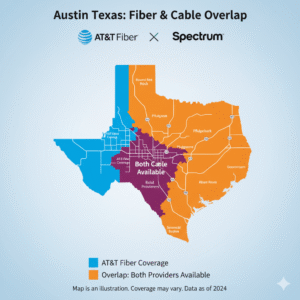
That’s why BestISPDeals recommends checking your exact address in USA before deciding. AT&T may have rolled out fiber in your area, while Spectrum might still rely on older coaxial lines.
You can check availability securely through BestISPDeals to compare your best options side-by-side — without affecting your credit or sharing unnecessary information.
5. Which Is Better for you in USA?
If both providers are available at similar prices, here’s a quick guide:
✅ Choose AT&T Fiber if:
- You want symmetrical upload and download speeds
- You stream, game, or work from home
- You prefer stable pricing without annual increases
✅ Choose Spectrum if:
- AT&T Fiber isn’t available in your area yet
- You’re comfortable with promotional pricing, and higher upload limits aren’t essential
- You prefer self-installation or local Spectrum store support
Both providers have strengths, but overall, AT&T Fiber generally provides better long-term performance and value, especially for households with high data demands.

Conclusion
While Spectrum offers strong cable-based options, AT&T’s fiber technology gives it a clear edge in speed, reliability, and long-term pricing stability. In most fiber-ready zones of USA, AT&T delivers a better overall experience — particularly for households needing consistent upload and download performance.
At BestISPDeals, we make comparing internet options simple, transparent, and secure. Check AT&T Fiber availability in USA today to see how you can upgrade to faster, more reliable home internet — without surprises.