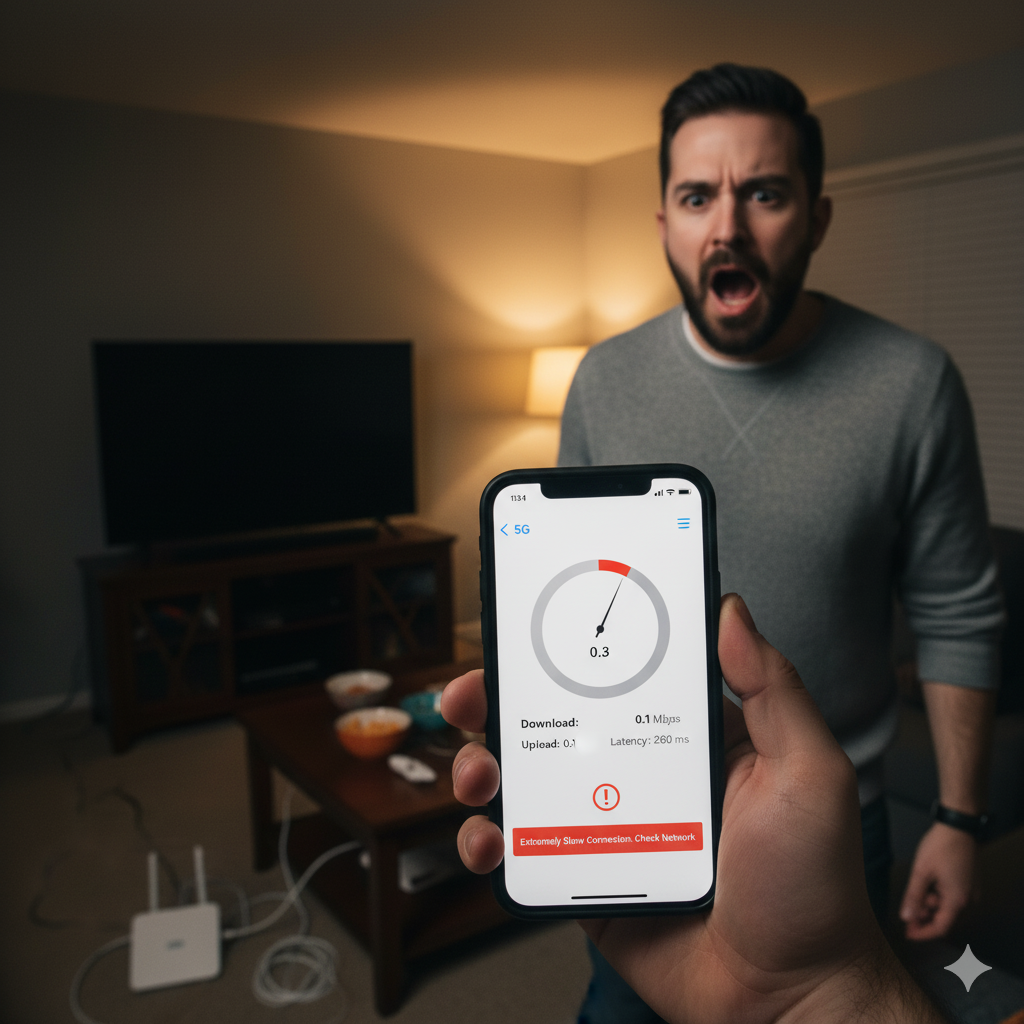
In recent weeks, many AT&T customers — even those on the highest-tier 5G Premium plans — have reported unexpectedly slow speeds, sometimes dropping to 3G-level performance or worse. This has created confusion and frustration among users who believe premium prioritization should guarantee fast service at all times.
At Best ISP Deals, we help consumers understand why these slowdowns happen, what AT&T means by “premium priority,” and how to recognize whether the issue is network congestion, tower upgrades, or device-level problems.
While premium plans offer benefits, they cannot override every factor affecting mobile data, especially in busy areas like USA. Here’s a clear breakdown of what’s going on.
1. Why Your AT&T 5G Premium Speeds Might Drop
Many AT&T Premium users believe their plan promises no throttling under any circumstance. While premium plans do provide higher priority during congestion, they do not guarantee consistently fast speeds if the network itself is struggling.
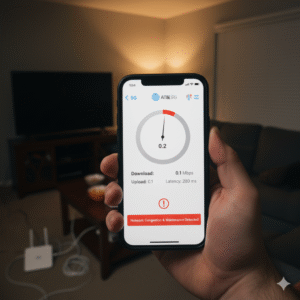
Slow speeds like 0.8 Mbps down and 0.03 Mbps up often point to:
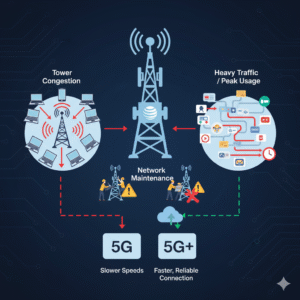
✅ Network congestion on overloaded towers
Even premium lines can slow if the tower is handling heavy traffic. Premium users get better placement in the queue, but if the tower is saturated, all users are affected.
✅ Tower maintenance or upgrades
Several commenters in the thread mentioned tower updates. During upgrades, performance often degrades for days — sometimes longer — especially in dense markets like USA.
✅ Temporary tower outages
If one tower goes offline, nearby towers absorb the load, weakening speed for everyone connected.
✅ Routing issues or network misconfigurations
Sometimes, problems can be fixed only by AT&T support refreshing your network profile.
✅ Device-level issues
Occasionally, resetting the network connection through the AT&T app, restarting the device, or refreshing eSIM/SIM settings can temporarily improve speeds.
2. Understanding “Premium” Data Priority — and What It Doesn’t Mean
Many customers misunderstand AT&T’s premium-tier promise.
✅ What premium DOES guarantee:
- Your line is prioritized over non-premium lines during congestion.
- AT&T will not intentionally throttle your speeds due to usage caps.
❌ What premium CANNOT guarantee:
- That a congested or damaged tower can deliver high speeds.
- That network maintenance will not temporarily reduce performance.
- That your individual device will always connect to the best band.
Think of it like a highway: even if you’re in the priority lane, you still can’t go fast if every lane is backed up.
This is why some AT&T users in USA experience slow speeds even on top-tier plans.
3. The Role of Tower Upgrades in USA
Multiple commenters confirmed AT&T is actively upgrading towers nationwide. During this process:
- Older equipment may run at reduced capacity
- Bands can be temporarily reassigned
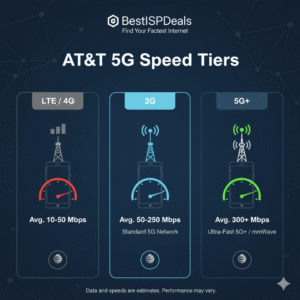
- 5G+ and 5G Standalone may be unavailable intermittently
- Devices may fall back to slower LTE/4G channels
These upgrades often last one to two weeks, and symptoms include:
✅ Sudden speed drops
✅ Speeds fluctuating wildly
✅ Call drops or SOS-only mode
✅ 5G icon appearing but performing like 3G
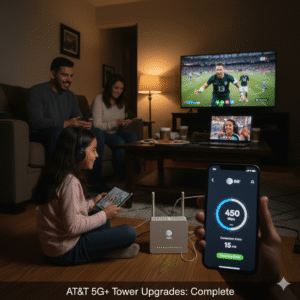
Once upgrades complete, users often see faster speeds and stronger signal stability.
4. Troubleshooting Steps That Sometimes Help (and Sometimes Don’t)
Users tried many fixes — some helped, some didn’t. Here’s what commonly works:
✅ Refresh connection via the AT&T app
Several users reported this instantly improved speeds.
✅ Restart the phone and allow a cooldown
Can reset the device’s link to the tower.
✅ Toggle 5G → LTE → 5G
Sometimes the phone latches onto a better band.
✅ Try eSIM reset or add a second carrier trial
A surprising number of users reported that activating a temporary eSIM (e.g., Visible) caused AT&T speeds to suddenly normalize — possibly due to the device forcing a new connection handshake.
❌ Clearing Safari cache
Multiple users were told this by customer support, but it does not affect overall mobile network speed.
❌ New SIM card
Usually makes no difference unless the SIM is physically damaged.
5. Why AT&T Support May Give Confusing Answers
Many customers reported odd or unhelpful suggestions from support teams, such as:
- Blaming the browser cache
- Claiming the phone is the issue
- Offering fixes that don’t apply to tower-level problems
In reality, customer support often does not have real-time tower upgrade visibility. They can only view:
- Estimated repair windows
- Generic tower status
- Device-level troubleshooting tools
This can result in inconsistent guidance, even when the underlying issue is clearly network-side.
6. When Slow Speeds Indicate a Bigger Issue
If speeds remain below 1 Mbps for more than a week in USA, it may indicate:
✅ A failing tower
✅ Misconfigured routing or provisioning
✅ A phone stuck on the wrong frequency band
✅ A recently added tower causing handoff issues
In these cases, calling AT&T, requesting a connection refresh, or asking for a provisioning reset can sometimes restore normal speeds.
Conclusion
AT&T 5G Premium promises high-priority data, but it cannot fully protect customers from:
- Tower congestion
- Ongoing upgrades
- Network instability
- Localized outages
Most slowdowns in USA occur because of tower work or heavy congestion, not intentional throttling.
While frustrating, these conditions typically resolve once upgrades complete or tower load stabilizes.
At BestISPDeals, we help customers understand what’s happening behind the scenes so they can make informed decisions — whether staying with AT&T, optimizing their current service, or exploring alternative carriers.